蛙养殖技术:幼蛙和成蛙的常见疾病防治Common diseases & prevention in juvenile and adult frogs
爪蟾养殖Husbandry
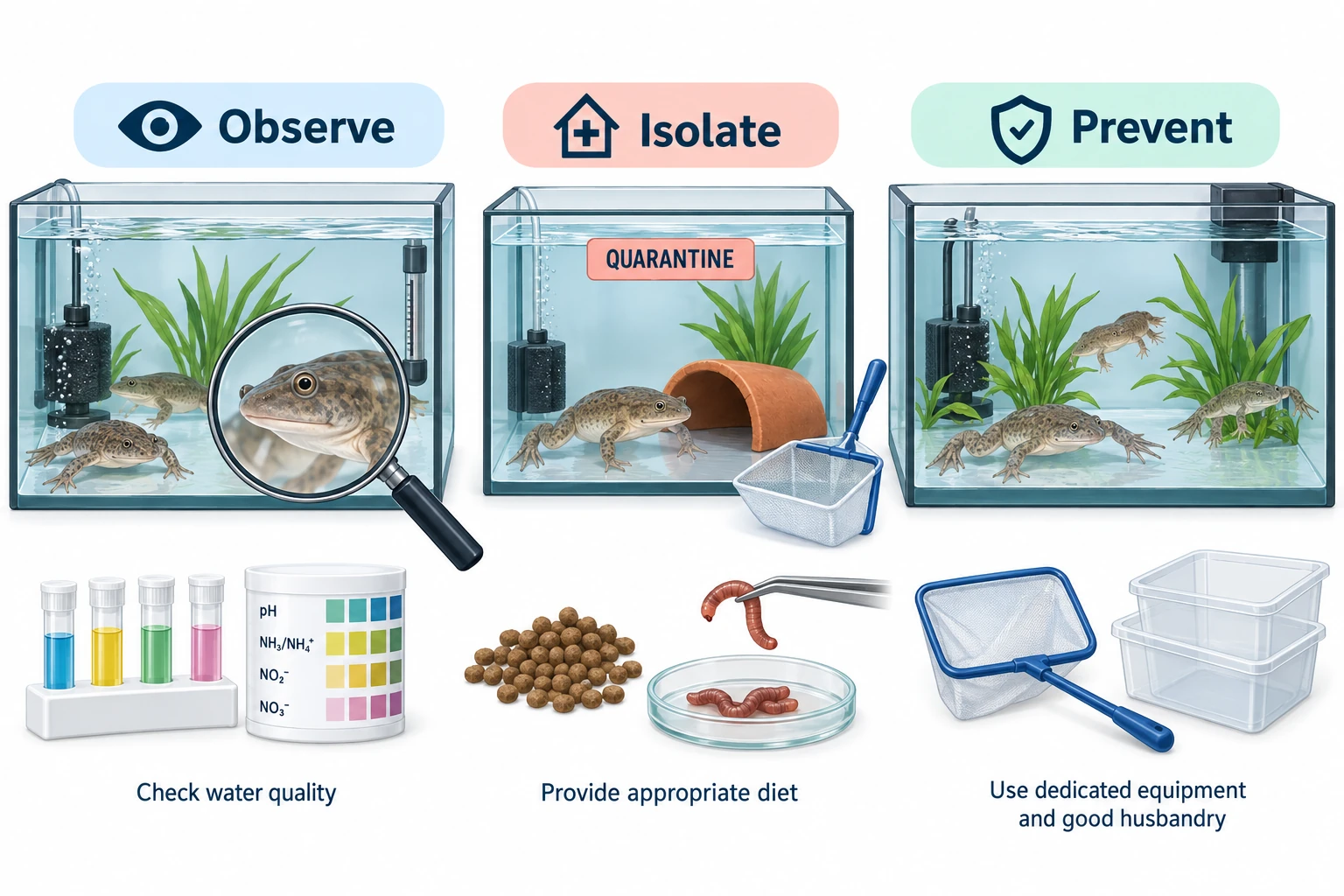
爪蟾养殖中坚持"预防为主、防重于治"的原则。严格控制水质指标(pH 6.8–7.5,氨氮 ≤0.2 mg/L),新进苗种执行 3–7 天隔离观察,养殖工具专池专用,可显著降低发病率。Xenopus husbandry follows a "prevention first" principle. Stringent water quality control (pH 6.8–7.5, ammonia ≤0.2 mg/L), 3–7 day quarantine for new stock, and dedicated equipment per tank markedly reduce disease incidence.
日常观察、隔离管理与专用工具有助于维护种群健康。 科研示意图。Routine observation, isolation and dedicated equipment support colony health. Scientific schematic.
病因与症状:养殖中致死率极高的急性传染病,多发于冬季低温期、水质恶化及放养密度过大时。初期腹部及腿部肌肉出现点状充血,严重时全身肌肉红肿,伴随内脏(肺、脾、肾、肠)扩散性感染。病蛙瘫软无力、行动迟缓、拒食,急性期通常 3–4 天内致死。Aetiology & signs: Acute highly lethal infection, most common during winter cold periods, deteriorating water quality and overcrowding. Early signs: punctate congestion of abdomen and legs; severe cases show systemic muscle inflammation with spread to lungs, spleen, kidney and gut. Affected frogs are flaccid, lethargic and anorexic; acute cases die within 3–4 days.
水体消毒:全池泼洒二氧化氯 0.3–0.5 mg/L,彻底消毒。Water disinfection: broadcast ClO₂ 0.3–0.5 mg/L throughout the tank.
药浴:隔离病蛙,用 25% 葡萄糖生理盐水(冷开水 100 mL + 食盐 0.9 g + 葡萄糖 25 g)配伍青霉素(40 万单位/100 mL)药浴,每日 2 次,每次 3–5 min。Bath treatment: isolate and bathe in 25% glucose saline (100 mL boiled water + 0.9 g NaCl + 25 g glucose) with penicillin (400,000 IU/100 mL), twice daily, 3–5 min per session.
重症注射:按体重肌注庆大霉素 4 万单位/kg。Severe cases: intramuscular gentamicin 40,000 IU/kg body weight.
免疫预防:苗种期引入嗜水气单胞灭活疫苗免疫。Immunoprophylaxis: inactivated Aeromonas hydrophila vaccine at juvenile stage.
2. 肠胃炎与腹胀气Enteritis & bloat
病因与症状:多发于春、夏及夏秋交替季节,主要由饵料腐败变质或水质底质恶化引发。肠胃炎型患蛙躁动不安、四处钻泥,后期静卧水池边,对外界刺激反应迟钝,彻底拒食。胀气型腹部异常膨大,下眼睑由透明转为乳白色,解剖可见肝肾肿大出血及胃肠壁发炎。Aetiology & signs: Common in spring, summer and autumn transitions; caused by spoiled feed or deteriorating water/substrate. Enteritis frogs are restless, burrow erratically, then become lethargic, lying at tank edges with complete anorexia. Bloated frogs have abnormally distended abdomens and opaque lower eyelids; necropsy reveals hepatomegaly, haemorrhagic kidneys and gastroenteritis.
内服:每千克饲料拌入酵母片 2 片或强力霉素 0.6 g,连续投喂 5–7 天。Oral treatment: mix 2 yeast tablets or 0.6 g doxycycline per kg feed; administer for 5–7 consecutive days.
微生态恢复:治愈后 2 天全池泼洒石灰水调至弱碱性,再隔 2 天补充水产专用益生菌重塑微生态。Microbiome recovery: 2 days post-recovery, apply lime water to mildly alkaline; 2 days later, introduce aquaculture probiotics to restore microbial balance.
3. 口唇红肿与白点病Mouth swelling & white-spot disease
症状:口唇充血红肿;或头部、背部皮肤出现白点,扩展成条状腐烂,严重时露出白骨。多因密度过大、体表机械损伤继发感染引起。Signs: Swollen, congested lips; or white spots on head/dorsum expanding to linear necrosis, exposing bone in severe cases. Usually secondary infection from physical injury due to overcrowding.
隔离病蛙,0.5% 盐水药浴;患处直接涂抹碘伏稀释液(1:10)或金霉素眼膏。Isolate; 0.5% NaCl bath; apply diluted iodophor (1:10) or chlortetracycline ointment directly to lesions.
内服:100–200 g 病蛙每只口饲磺胺嘧啶片 125 mg + 复合维生素颗粒,连用 6 天。Oral: 100–200 g frogs — sulfadiazine 125 mg + multivitamin per animal, for 6 consecutive days.
4. 烂腿病与肿腿病Leg rot & leg oedema
症状:趾尖发炎腐烂,逐渐向上蔓延至大腿甚至暴露骨骼;或后肢整体肿大呈瘤状,病蛙因负重无法活动,消瘦致死。Signs: Inflammation and necrosis starting at toe tips, spreading proximally to the thigh and sometimes exposing bone; or generalised limb oedema leaving frogs immobile and progressively emaciated.
水池彻底生石灰清池消毒。Thoroughly disinfect tank with quicklime.
患肢浸泡于高锰酸钾溶液(2–30 mg/L)中 15 min,每日 1 次,连用 3 天。Soak affected limbs in KMnO₄ (2–30 mg/L) for 15 min once daily for 3 days.
抗菌:每日 2 次内服四环素(每次半片,连用 2 天),或单次肌注青霉素 40 万单位。Antibiotic: oral tetracycline (½ tablet twice daily for 2 days), or single IM penicillin 400,000 IU.
二、真菌与寄生虫疾病II. Fungal & parasitic diseases
1. 水霉病(肤霉病)Saprolegniasis (water mould)
症状:水温较低或体表有外伤时易发。霉菌丝侵入伤口,患处长出棉絮状白毛,病体游动迟缓,逐渐衰竭死亡。Signs: Predisposed by low water temperature or skin injuries. Fungal hyphae invade wounds, producing cotton-like white growths. Affected animals become sluggish and progressively debilitated.
症状:寄生于体表或鳃部引起黏膜发白、组织溃烂、呼吸困难;寄生于肠道导致极度消瘦、营养不良。Signs: Surface/gill infestation causes mucosal pallor, ulceration and dyspnoea; intestinal parasites lead to severe cachexia and malnutrition.
体表驱虫:硫酸铜与硫酸亚铁合剂(5:2)0.7 mg/L 浸泡 20–30 min;或全池泼洒敌百虫 0.5 mg/L。External parasites: copper sulphate–ferrous sulphate (5:2) at 0.7 mg/L for 20–30 min; or broadcast trichlorfon 0.5 mg/L.
肠道驱虫:大蒜素粉拌料(1–2%)连续投喂,广谱抑菌驱虫,替代禁用药。Intestinal parasites: feed allicin powder (1–2% in feed) continuously; provides broad-spectrum antimicrobial and antiparasitic activity as a compliant alternative to restricted compounds.
病因:光照过强、水生植物光合作用剧烈,水体气体过饱和。蝌蚪或幼蛙误吸气泡后腹部膨胀,仰浮于水面,肠道内充满气体。Cause: Intense illumination and vigorous aquatic plant photosynthesis cause gas supersaturation. Tadpoles/froglets ingest bubbles, leading to abdominal distension, dorsal floating and intestinal gas accumulation.
将病体转移至清新水体中暂养 1–2 天,完全停止投喂,体内气体分压自然平衡后排出。Transfer to fresh, gas-normal water for 1–2 days; withhold all feed to allow gas pressure equilibration and expulsion.
日常控制水体肥度及水草密度,避免强光直射。Routinely control water eutrophication and aquatic plant density; avoid direct strong illumination.
2. 烂皮病(维生素 A 缺乏症)Skin necrosis (vitamin A deficiency)
症状:因饲料营养单一、长期缺乏维生素 A 引发。皮肤失去光泽,出现白色花纹后大面积脱落;瞳孔出现粒状突出,变白甚至失明;蝌蚪期常伴随体腔积水。Signs: Chronic vitamin A deficiency from monotonous diet. Skin loses lustre, develops white patches then large-area desquamation; pupils granulate, turn white and may cause blindness; tadpoles often show concurrent coelom oedema.
隔日补喂新鲜动物肝脏 1 g 或直接滴喂鱼肝油,通常 1 周后表皮开始再生。Supplement every other day with 1 g fresh liver or a dose of fish-liver oil; skin regeneration typically begins within one week.
继发细菌感染者配合青霉素药浴。If secondary bacterial infection is present, add penicillin bath treatment.
预防:人工配合饲料中添加水产复合维生素(VA ≥5000 IU/kg)。Prevention: ensure compound feed contains aquaculture multi-vitamin with VA ≥5000 IU/kg.
3. 脱肛病Rectal prolapse
症状:多见于成蛙,直肠外露于肛门外约 2 cm,极易引发严重感染,须立即处理。Signs: Mainly in adults — rectal tissue prolapses ~2 cm beyond the cloaca; carries high risk of secondary infection and requires immediate intervention.
用消毒液及冷开水洗净外露直肠表面,小心将其塞回泄殖腔内(物理复位)。Clean prolapsed tissue with disinfectant and cooled boiled water; gently return it to the cloaca (manual reduction).
放入隔离网箱或光线较暗的容器单独静养,减少弹跳,促进括约肌收缩力恢复。Isolate in a dim, low-stimulation container to restrict jumping and allow sphincter tone to recover.
疾病Disease
关键用药Key treatment
预防重点Prevention focus
红腿病Red-leg
ClO₂ 0.3–0.5 mg/L;青霉素药浴;庆大霉素 4万 IU/kg IM
低温期水质管控,控制密度Water quality in cold season, control density
避免体表损伤,维持适宜水温Prevent skin injury, maintain temperature
烂皮病Skin necrosis
鲜肝脏 1 g 隔日喂;鱼肝油1 g fresh liver every other day; fish-liver oil
VA ≥5000 IU/kg 饲料
疾病防控核心:稳定水质(pH 6.8–7.5,氨氮 ≤0.2 mg/L)、合理放养密度、新进苗种隔离 3–7 天、器具专池专用。一旦发现病蛙立即隔离,避免交叉感染扩散。所有抗菌药物须按规定休药期管理,禁止使用孔雀石绿等违禁药物。Disease control essentials: stable water quality (pH 6.8–7.5, ammonia ≤0.2 mg/L), proper stocking density, 3–7 day quarantine for new stock, dedicated equipment per tank. Isolate affected frogs immediately to prevent spread. All antimicrobials must observe required withdrawal periods; malachite green and other prohibited substances are strictly banned.
参考文献References
Pessier AP (2002) An overview of amphibian skin disease. Semin Avian Exotic Pet Med 11(3):162–174.
Densmore CL & Green DE (2007) Diseases of amphibians. ILAR J 48(3):235–254.
Wright KM & Whitaker BR (2001) Amphibian Medicine and Captive Husbandry. Krieger Publishing.