1991 · 研究进展Research
原文作者:Suzanne Royer,PhD,原刊载于 The Daphnian(1991年2月)。本文为科普译介,经适当改编。Original article: Suzanne Royer, PhD, The Daphnian, February 1991. Adapted for this site.
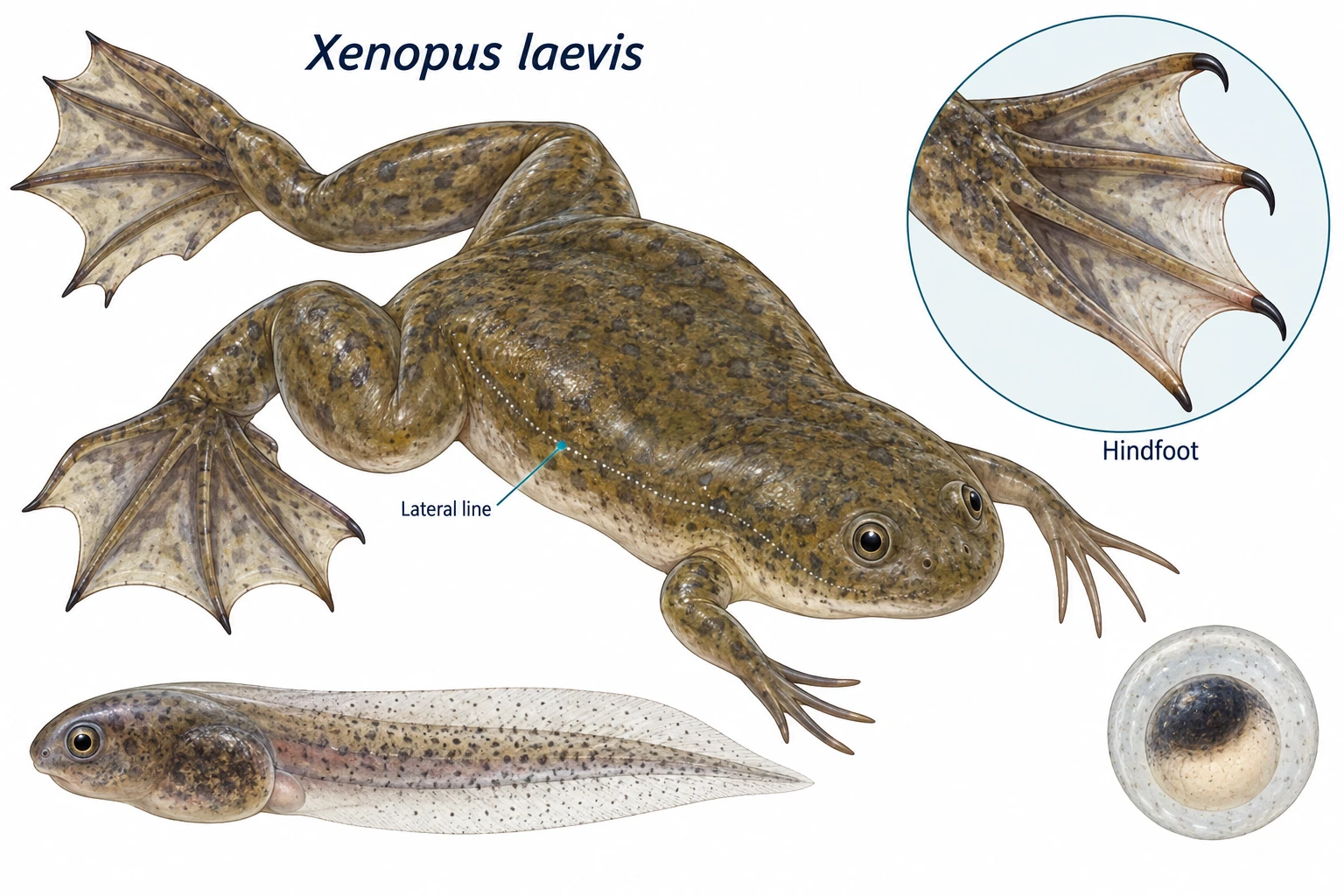
非洲爪蟾(Xenopus laevis,African clawed frog)是一种终生水栖的非洲蛙类,因其独特的外观和行为在水族爱好者和科学家中均享有盛名。它没有外耳,皮肤光滑无疣,后足内侧三趾具黑色角质爪(这正是"爪蟾"名称的由来),前足无蹼,细小灵活,用于将食物塞入口中。Xenopus laevis, the African clawed frog, is a permanently aquatic African frog popular among aquarium hobbyists and scientists alike. It lacks external ears, has smooth, warty-free skin, three black-clawed inner toes on the hindfoot (giving the "clawed" in its name), and small, dextrous, unwebbed forelimbs used to stuff food into its mouth.
成体体长 8–12 cm,雌性体型显著大于雄性;体形扁平,适合水中潜伏。背部呈橄榄绿至棕褐色,腹部银白或淡黄,体侧具沿侧线排列的感觉器官(隆起的"线缝状"器官),用于感知水流振动。无舌,通过快速吸水方式捕食。Adults measure 8–12 cm; females are substantially larger than males. The body is flattened for aquatic ambush hunting. The dorsum is olive-green to brown, the ventrum silver-white or pale yellow. A row of sensory-organ "stitches" along the lateral line detects water vibrations. Tongueless, X. laevis captures prey by rapid water suction.
原产于非洲撒哈拉以南的湖泊、池塘和低洼积水地带。在旱季,爪蟾可在泥土中休眠数月,并在夜间短距离陆上移动寻找新水源。它是机会主义的肉食动物,无论活物还是腐食,只要能够入口均会吞食(包括小鱼、无脊椎动物甚至同类幼体)。无声带,雄性通过敲击软骨发出轻柔点击声求偶。Native to sub-Saharan African lakes, ponds and seasonal pools. During drought, it can aestivate in mud for months, and at night may move overland between water bodies. An opportunistic carnivore, it consumes anything that fits in its mouth: small fish, invertebrates, even conspecific larvae. It lacks vocal cords; males produce soft clicking sounds by flexing laryngeal cartilages during courtship.
野外繁殖在雨季水温升高时自然发生。在实验室,可通过注射激素诱导按需产卵:In the wild, spawning occurs at the onset of the wet season when water temperature rises. In the laboratory, spawning can be induced on demand by hormonal injection:
| 时间Time | 事件Event |
|---|---|
| 0 h | 受精Fertilization |
| 1.5 h | 第一次卵裂First cleavage |
| 8 h | 囊胚期Blastula |
| 12 h | 原肠胚期Gastrula |
| 20 h | 神经胚期Neurula |
| 42 h | 孵化(NF 35)Hatching (NF 35) |
| 5–7 d | 自由游泳蝌蚪Free-swimming tadpole |
| 数月 | 变态为幼蛙Metamorphosis to froglet |
| 12–18 月 | 性成熟成体Sexually mature adult |
严禁野外放生!非洲爪蟾已在美国、法国、智利等多个地区建立入侵种群,并被认为是传播壶菌病(Batrachochytrium dendrobatidis,Bd)的重要媒介,对全球两栖动物生物多样性构成严重威胁。废弃的实验动物及宠物爪蟾必须由专业机构处理。Never release into the wild! X. laevis has established invasive populations across the USA, France, Chile and elsewhere. It is a primary carrier of chytrid fungus (Batrachochytrium dendrobatidis, Bd), a major driver of global amphibian biodiversity loss. Unwanted laboratory or pet frogs must be disposed of by professional facilities.